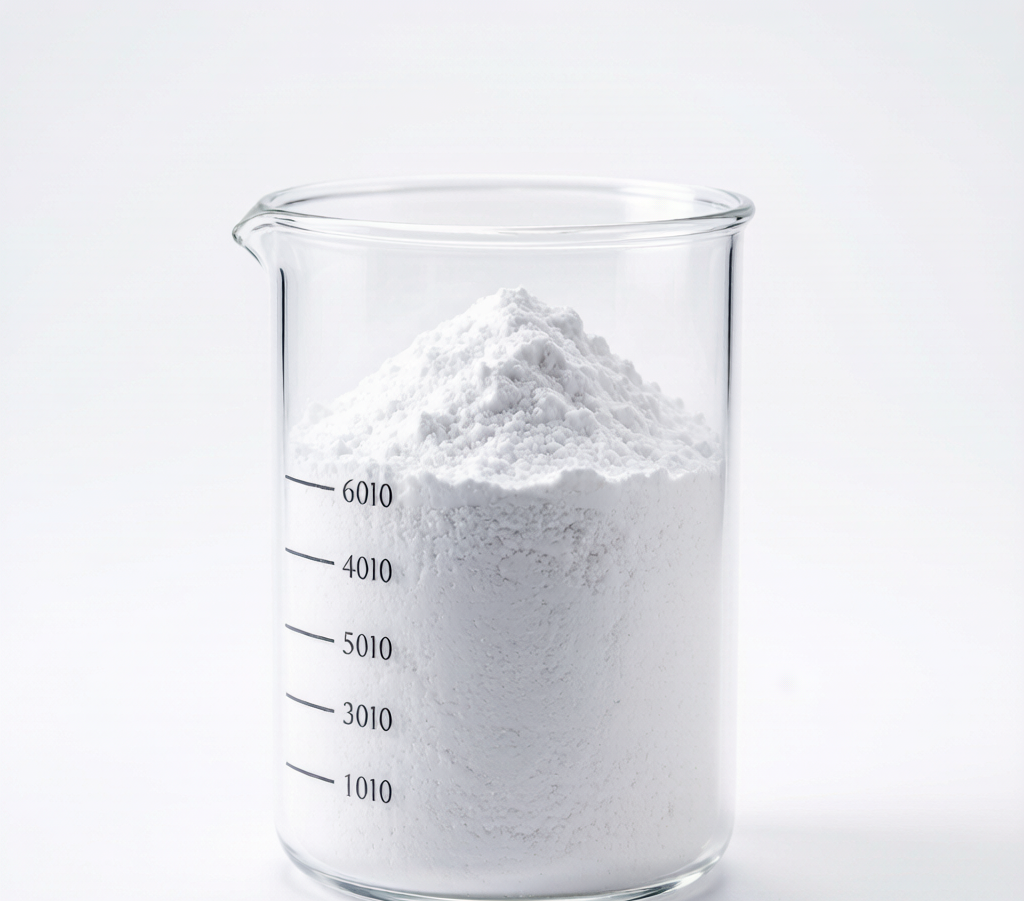
Germanium dioxide (GeO2), also known as germania, is a white crystalline or amorphous powder with exceptional optical and semiconductor properties. It exists in two crystalline forms: hexagonal (soluble, stable at low temperatures) and tetragonal (insoluble, stable above 1033°C), with an amorphous form also available. The compound has a high refractive index (~1.7) and excellent infrared transmission, making it indispensable in optical fiber manufacturing and infrared optics.
We supply high-purity germanium oxide from 99.9% (3N) to 99.999% (5N) grades. The 5N grade is specifically used as a core dopant in optical fiber production, where it increases the refractive index of the fiber core to enable total internal reflection. Other major applications include PET resin catalysts, infrared lens manufacturing, germanium metal production, and semiconductor substrate fabrication.
| Molecular Formula | GeO2 |
| Molecular Weight | 104.64 g/mol |
| Appearance | White powder or colorless crystals |
| Odor | Odorless |
| Density | 4.23 g/cm3 (hexagonal) / 6.24 g/cm3 (tetragonal) |
| Melting Point | 1,115°C (hexagonal form) |
| Boiling Point | ~1,200°C (sublimes) |
| Solubility in Water | Slightly soluble (~0.4 g/L at 25°C, hexagonal form); insoluble (tetragonal form) |
| Solubility (other) | Soluble in strong bases (forms germanates); soluble in ethylene glycol |
| Refractive Index | ~1.7 (amorphous form, at 589 nm) |
| Band Gap | 4.8-5.0 eV |
| Crystal Transition Temperature | 1,033°C (hexagonal ↔ tetragonal) |
| Product Name | Germanium Oxide (Germanium Dioxide) |
| Other Names | Germania, GeO2 |
| CAS Number | 1310-53-8 |
| EINECS Number | 215-180-8 |
| HS Code | 28183000 |
| Purity (GeO2) | ≥ 99.99% (4N) / ≥ 99.999% (5N) available |
| Arsenic (As) | ≤ 0.5 ppm (5N grade) |
| Iron (Fe) | ≤ 2.0 ppm (5N grade) |
| Copper (Cu) | ≤ 0.2 ppm (5N grade) |
| Nickel (Ni) | ≤ 0.2 ppm (5N grade) |
| Lead (Pb) | ≤ 0.1 ppm (5N grade) |
| Cobalt (Co) | ≤ 0.2 ppm (5N grade) |
| Aluminum (Al) | ≤ 1.0 ppm (5N grade) |
| Loss on Drying | ≤ 0.05% |
| Particle Size | Customizable (typically <40 µm; <1 µm available for IR optics) |
| Crystal Form | Hexagonal / Tetragonal / Amorphous |
| Grade | Optical Grade / Electronic Grade / Catalyst Grade |
| Hazard Class | Non-hazardous (general cargo) |
| Package Type | Sealed HDPE bottle or fiber drum with inner PE bag |
| Net Weight | 1 kg / 5 kg / 25 kg |
| Labeling | Product name, purity grade, batch number, production date |
| Storage | Seal tightly, store in cool dry place, protect from moisture |
| Shelf Life | 36 months under proper storage |
Germanium oxide is classified as non-hazardous (GHS07, Warning — H302: Harmful if swallowed). However, standard laboratory handling practices are recommended. Avoid generating and inhaling dust. Use N95 dust masks, safety glasses, and gloves when handling. Store in tightly sealed containers in a cool, dry, well-ventilated area, away from strong acids and bases. Protect from moisture. MSDS available upon request.
Q: What purity grade do I need for optical fiber production?
Optical fiber manufacturing requires 5N (99.999%) purity GeO2. Trace metal impurities (especially transition metals) can cause optical attenuation in the fiber. We supply certified 5N grade with full impurity analysis (As, Fe, Cu, Ni, Pb, Co, Al).
Q: What is the difference between hexagonal and tetragonal GeO2?
Hexagonal GeO2 is slightly soluble in water and is the form used for most applications. Tetragonal GeO2 is insoluble in water and forms above 1033°C. The crystal form can be specified when ordering.
Q: Do you provide COA with each shipment?
Yes, a detailed Certificate of Analysis including purity and trace metal impurity levels is provided with every batch. TDS and MSDS are also available upon request.
